The year is drawing to a close quickly as our schedules fill up with activities that are likely not business related. That makes lots of sense since we’re smack dab in the middle of the holiday season. It’s a good excuse to let up on the gas pedal of our coaching business.
But what about next year?
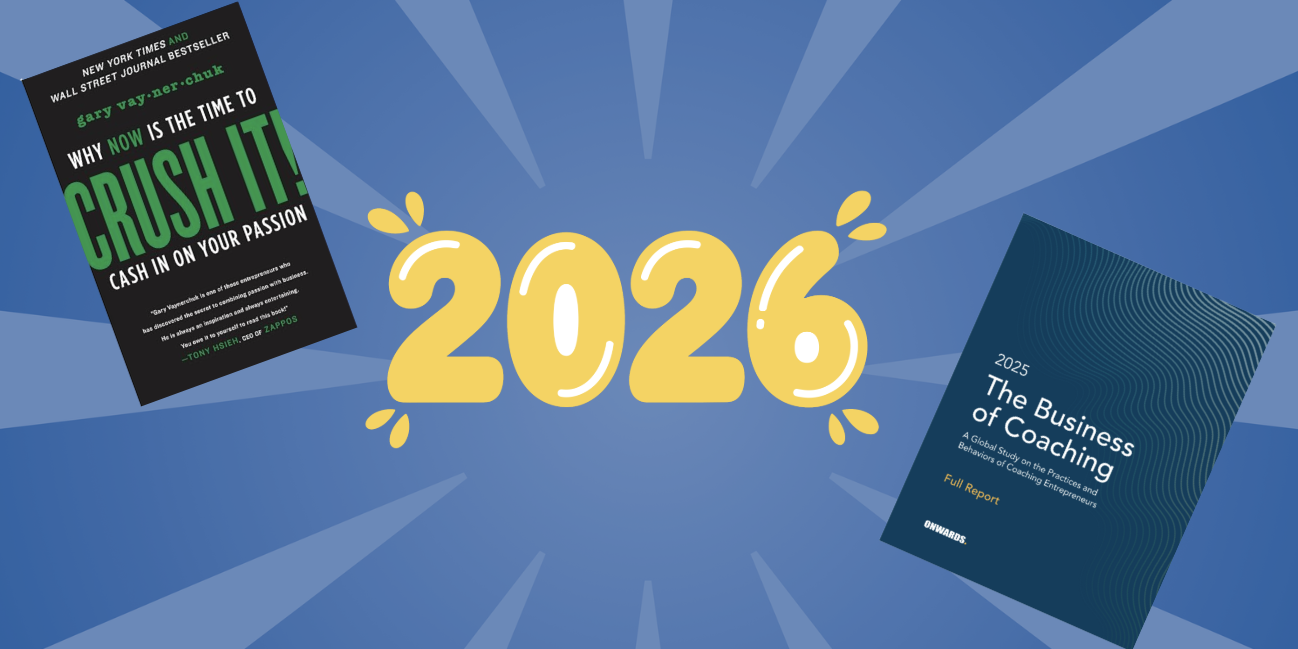
I recall early on in my coaching career when I was listening to the audiobook Crush It written by Gary Vaynerchuk. It was a new release at the time (2009), and I listened to it enthusiastically hoping for some insights that might help me succeed faster since business was off to a slow start.
Gary had taken over the liquor store his parents owned and raised revenues tenfold. Obviously, he knew a thing or two about growing a business.
I learned two important lessons from that book.
-
Get on video. Gary created Wine Library TV where he rated wine in terms laymen could understand. Most wine snobs spoke in ways average consumers couldn’t relate to at all. Gary saw an opportunity and seized it by leveraging the power of video at a time when few were doing so. I started dabbling with video not long after that. Unbelievably, I’m still creating videos all these years later. I may not look as good these days, but my quality has improved.
-
You need to treat your coaching practice like a business and work like you actually want to get somewhere. The work ethic that Gary represented and espoused in the book was vastly different than what I’d been doing. I was still going to Costco in the afternoons when it was slow and seeing old work buddies for long lunches. How was that treating my practice like a business?
Fast forward to 2025 and The Business of Coaching Global Study released by Chris Chaia, ACC. Chris decided to do her own research to study the behaviors and practices of coaching entrepreneurs.
308 coaches participated in the study, their median time coaching is 7 years, 91% are ICF-accredited and 70% coach as their primary occupation. That’s a good study group.
She put a lot of effort into it and sells the report for hundreds of dollars. I bought it since she told me the results were far different than those that could be found in ICF’s global study of coaching. She was right.
One key finding that stands out to me is that of the participants, 72% defined themselves as either somewhat or very successful. And, of those who considered themselves successful, 44% defined their practice as profitable.
Interesting, right? Chris found that many coaches defined success through client outcomes. I think we all do and therefore may feel successful even if our practice isn’t profitable. Unfortunately, that may not lead to a long career in coaching.
So then, what do those coaches who run profitable practices do differently than those who don’t? A lot of it came down to how they saw themselves. Most coaches see themselves as… coaches. That’s not very surprising.
The other term Chris offered to respondents as a way to describe themselves was entrepreneur. It turns out that those who self-identified themselves as entrepreneurs are more likely to work 30+ hours weekly, prioritize revenue goals (though this wasn’t too far apart), actively invest in lead generation and client acquisition, and are more likely to look outside their practice for support.
Now I have long looked at my coaching practice as a business. I learned years ago when I owned a franchise that I should see myself as owning a sales and marketing business that sells professional development services. That type of thinking puts you in the right mindset to treat it as a business.
And way back in 2009, Gary V. helped me to realize that mindset is not enough. You gotta work too! I consistently put in 40+ hours a week on this business.
The last thing I’ll say is that even with all this knowledge, I’d still answer the question of what do you do with the answer that I’m an executive coach. However, this year, for some reason, I decided to answer the question with this statement, “I own a professional services company.”
When they ask about the services, then I’ll answer with coaching, training, assessments, etc. It’s funny it’s taken me this long to think about answering this way. But that’s okay. Better late than never!
I hope to secure an interview with Chris Chaia to post on my channel in early 2026. I suspect her other thoughts about how to run a profitable coaching business will be very helpful. I’ll be sure to share it with you when it goes live.
And now we come to the most important part of this piece. Are you treating your practice like a business? Are you following the practices of those coaches who self-identify as entrepreneurs? What changes will you make for 2026 that will lead to greater success?
I’m all ears. Let me know what you are planning to do differently in the new year. I’d love to hear from you!